

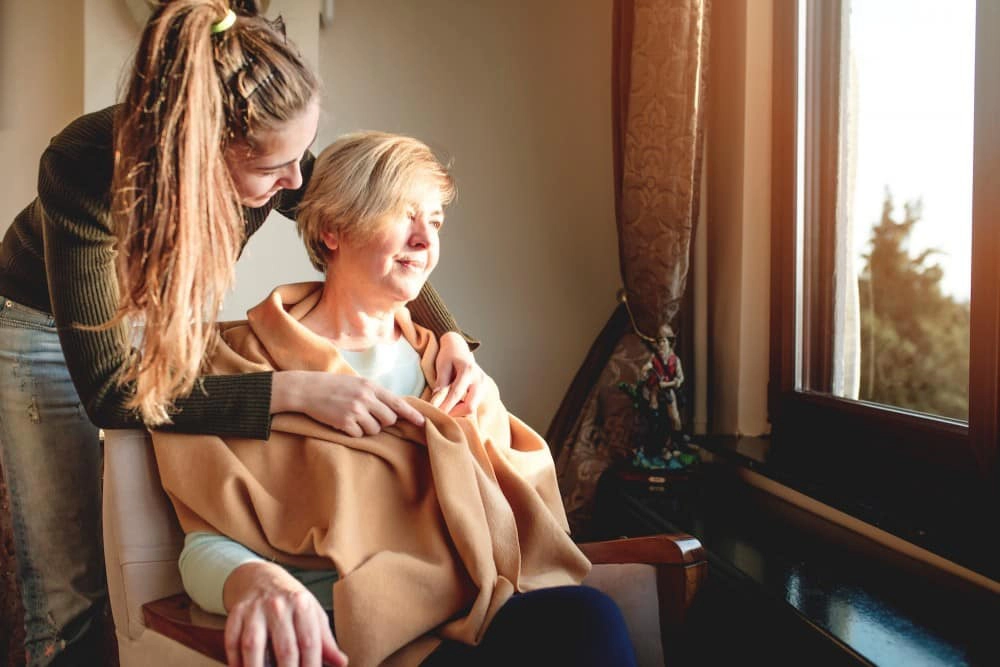
Did you know that nearly 40% of seniors aged 65 and over experience memory loss at some point?
While the actual diagnosis of Alzheimer’s disease affects less than 10% of this population, the impact of this condition is still significant. For those living with Alzheimer’s, the symptoms can quickly disrupt daily life and routines.
In this article, we’ll walk you through 10 common Alzheimer’s behaviors to watch for, and provide essential guidance on how to support a loved one dealing with this challenging disease. Understanding these signs early can make a world of difference in their care and quality of life.
Symptoms & Alzheimer : 10 Behaviors to Look for
Defined as a chronic deterioration of particular brain cells, leading to the onset of a range of cognitive symptoms, Alzheimer’s disease represents a progressive dementia that can be subdivided into different stages. From early Alzheimer’s to the more advanced stages of the disease, many behaviors which are characteristic of this type of dementia can be identified. To guide you, here are the main top 10 symptoms to be aware of.
1. Memory Loss
Frequent forgetfulness and memory problems are undoubtedly among the earliest and most common symptoms of Alzheimer’s disease. However, as mentioned earlier, memory loss can exist without being caused by any form of neurodegenerative disease. In fact, the simple process of normal aging can, in some cases, be the primary cause of some memory lapses.With Alzheimer’s disease, the frequency of these memory problems will usually be higher, and progress over time. It is therefore important to remain vigilant about the evolution of symptoms, in order to be able to discern the differences between Alzheimer’s disease and normal aging.
2. Impaired Reasoning
Another sign to watch out for is the emergence of impaired ability to reason. Depending on the stage of the disease, the manifestation may appear different : Impaired thinking ;
Difficulty interpreting numbers and calculations ;
Incapability to organize finances (although the person used to be able to do so) ;
Decision-making becomes more difficult ;
etc.
3. Language Disorders / Communication Difficulties
Whether spoken or written, language disorders associated with Alzheimer ‘s disease appear among the behavioral symptoms of Alzheimer’s to watch out for. Simple words and everyday expressions are often replaced by paraphrases, similar terms or even invented words.Since reading and writing are also affected, we encourage you to discuss any sudden changes with your elderly relative’s doctor or health care professional.
4. Alzheimer’s Related Mood Changes and Personality Disorders
Depending on the progression of the disease, mood changes and personality disorders may also develop. These Alzheimer’s related symptoms, often at a more advanced stage, tend to occur rather drastically, sometimes without any apparent reason. The appearance of unusual behaviors, foreign to the person you know so well, or even signs of depression, are frequently observed in seniors affected by Alzheimer’s disease.Do you feel you no longer recognize your close relative ? Feeling helpless facing such a situation ? Do not hesitate to ask for assistance by taking advantage of the confidential and free support services available especially for family caregivers experiencing such situations. Alzheimer Society of Canada, for example, may help you to find some helpful support.
5. Loss of Interest in Social Activities / Isolation of Seniors
In addition to alterations in mood and personality, seniors living with Alzheimer’s often demonstrate a loss of interest toward social activities. Notice that an elderly relative you care about is less interested in a hobby or pastime that used to brighten his or her day ? Be aware that such changes in behavior may, in some cases, be associated with the consequences of Alzheimer‘s disease.When faced with this kind of situation, special attention should be paid to prevent problems related to social isolation among seniors.
6. Difficulty Performing Daily Tasks
As Alzheimer’s dementia progresses, everyday tasks may become more difficult to perform. Planning the day, paying the bills, shopping or even preparing a meal may turn into a real challenge.
Thankfully, solutions do exist to support seniors with Alzheimer’s symptoms in carrying out day-to-day activities.
7. Confusion and Orientation Disorders
When Alzheimer’s symptoms begin to manifest, early signs of space-time confusion can be particularly destabilizing, both for the seniors and their families.
Impaired sense of time, difficulties remembering the present day or month, inability to orient in space, these are only some examples of symptoms and problematic behaviors that can be associated with progressive Alzheimer’s disease.
8. Agnosia : Loss of Ability to Recognize
Ever heard of agnosia before ? Defined as a loss of the ability to recognize objects, as well as common places, this behavioral disorder observed in seniors suffering from Alzheimer’s may also be associated with difficulty in recognizing even familiar faces.Caused by damage to sensory areas of the brain, these symptoms are amongst the most difficult to accept for people close to the patient. However, to the best of your ability, it is strongly recommended that you continue to be reassuring towards your elderly loved one, and opt for a calm approach. In fact, your patience and creativity in finding simple ways to communicate can make a world of difference for the person you care about.
9. Impaired Vision
While not affecting all people diagnosed with the disease, vision problems do appear among the changes that can be observed in association with Alzheimer’s. These physical symptoms can sometimes combine with and amplify other behavioral symptoms, such as spatial confusion and difficulty recognizing one’s immediate environment.
10. Behavioral Triggers and Aggressive Symptoms, mostly in late stages of Alzheimer’s disease
Of all the many Alzheimer’s symptoms, behavioral disorders and aggressive reactions are certainly among the most feared by family and relatives. Agitation, hallucinations and delusions are common examples of Alzheimer’s behavioral disorders, also referred to as the 3 types behavioral triggers.
While this may sound easier said than done, it is crucial to stay calm when confronted with these situations. Whenever possible, finding the cause of the behavior can certainly help to prevent a recurrence. And, of course, if you feel that your safety is at risk, no matter how, please leave and call for help.
Alzheimer’s Disease in Older Adults: Essential Resources and Support
Despite the challenges, there are valuable resources available to help people with Alzheimer’s, as well as their families and caregivers. If you’re looking for advice, don’t hesitate to ask for help. Caring for someone with Alzheimer’s can seem overwhelming, but you’re not alone in this situation.
When should you ask for help?
The needs of people with Alzheimer’s disease increase as the disease progresses. It is important to seek help at the first signs so that you can be prepared for future needs.
Concerned about a loved one’s safety?
If the needs of an aging loved one are becoming more demanding, or if you are concerned about their safety and health, a specialized Alzheimer’s care facility could be the ideal solution. Visavie offers a fast, professional, and free service to help you find the best care solution for your loved ones.

Home Care & Specialized Alzheimer’s Retirement Homes
For many seniors with Alzheimer’s, staying in a familiar environment offers comfort and stability. Home care services tailored to their needs are an excellent solution. Specialized services for seniors with Alzheimer’s and other neurocognitive disorders ensure their safety and well-being at home.
Contact Visavie for a free consultation
Serving Ontario and Quebec, Visavie offers expert advice to help you navigate the right retirement community options for you or your loved ones. Let us help you find the perfect fit, with no cost and no obligation. Reach out today for personalized support!
More articles
The sandwich generation: what is it?
What do you know about the “sandwich generation”? This concept is becoming increasingly common, affecting a large proportion of the adult population. The sandwich generation refers to people who have to look after their children at the same time as caring for aging or…

Ontario Seniors Care at Home Tax Credit (2025–2026): Complete Guide
The Ontario Seniors Care at Home Tax Credit is a refundable provincial tax credit that allows individuals aged 70 and older to recover up to 25% of eligible medical expenses that support aging at home. Whether you live in your own house, an apartment, or a retirement…

Tax Credit for Home-Support Services for Seniors in Québec (2025–2026): Complete Guide
The tax credit for home-support services for seniors (CMD) is a refundable Québec tax credit that allows individuals aged 70 and older to recover up to 39% of eligible expenses for home-support services. Whether you live in your own house, an apartment, a condo, or a…